No-glow vs low-glow trail camera: which flash type should you buy?

Moultrie Edge 2 Pro
$65.00 listed price, changes oftenWhat does no-glow actually mean?
No-glow refers to an infrared flash around 940nm, a wavelength invisible to the human eye and to most game animals at night. Cameras like the Moultrie Edge 2 Pro and the Bushnell Core DS-4K No Glow use this flash so the camera does not give away its own position with any visible light, which matters most for wary or pressured deer, or for a security use where the owner does not want the camera obvious at night. The trade is a shorter night flash range and slightly grainier low-light images compared to a brighter flash type.
No-glow is sometimes marketed as "invisible flash" or "black flash," different names for the same 940nm technology. None of these labels indicate a meaningfully different flash from one brand to the next; the real variation between models is in flash power and lens quality, which affects actual night range more than the wavelength label itself does.
What does low-glow mean, and can people actually see it?
Low-glow uses an infrared flash around 850nm, which produces a faint red glow that is visible only if someone looks directly at the camera while it fires, from roughly straight on. From an angle, or from any real distance, it is easy to miss. Cameras like the Moultrie Edge 3 and the Bushnell Prime Low Glow use this flash type because it typically reaches farther at night than a no-glow flash on similar hardware, producing a brighter, cleaner night photo at the cost of that faint visible glow.
The visible glow is also easy to test for before ever mounting the camera outside: standing directly in front of the lens in a dark room and triggering the flash by hand will show the faint red tint clearly if the camera is low-glow, and show nothing visible at all if it is genuinely no-glow. This quick check is a useful way to confirm which flash type a specific unit actually shipped with before relying on the listing's stated spec.
Which one spooks deer less?
No-glow, by a clear margin, since it produces no visible light at all. Pressured deer on heavily hunted ground, or a spot checked during the rut when deer are already on edge, is the classic case for a no-glow camera like the Moultrie Edge 2 Pro or the GardePro X66 Pro Cellular. Low-glow's faint red flicker is subtle enough that most owners report little difference in deer behavior, but a no-glow flash removes the question entirely, which is worth the shorter range trade on a heavily scouted trail.
Which one gives a better night photo at range, and does no-glow matter more for security use?
Low-glow generally wins on raw night range and brightness, since an 850nm flash is more efficient at throwing light farther than a 940nm flash of similar power. A low-glow camera like the Moultrie Edge 3, listing a 100 ft detection range, tends to produce a cleaner, more detailed night photo at that distance than a similarly priced no-glow model. No-glow images at long range can look grainier and darker, a real trade for the invisibility.
That invisibility matters arguably more for security than for hunting. A camera watching a driveway, gate or cabin at night benefits from staying invisible so it does not tip off anyone that they are being recorded, which is exactly the no-glow use case outside of hunting. That said, a security setup should still follow the same rules as any camera: never point it into a neighbor's windows or private space, get permission on land not owned by the camera's owner, and post a sign where appropriate, since recording and audio laws vary by state and country regardless of flash type. More on this at can trail cameras be used for home security.
Does detection range change based on flash type, and is white flash ever the better option?
Flash type and detection range are technically separate specs, one governs how far the sensor notices motion, the other governs how far the night flash actually illuminates the subject once triggered. In practice they matter together: a camera with a wide 100 ft detection range but a shorter no-glow flash reach will happily trigger on something at the far edge of that range at night, then produce a dark, mostly useless photo because the flash never reached that far. Reading both specs, not just detection range alone, is the more reliable way to judge how a camera will actually perform after dark. This is one reason a stated 100 ft detection range on a low-glow camera like the Moultrie Edge 3 is worth more in practice for night captures than the same 100 ft figure on a shorter-range no-glow flash camera, even though both list the same detection distance. The detection range chart at detection range explained and the no-glow versus low-glow chart both break this distinction down further.
White flash sits outside this no-glow versus low-glow comparison entirely, worth mentioning only because some buyers assume "flash" always means one of these two infrared types. It produces full color night photos, which can help identify a vehicle color or a person's clothing clearly, useful for some security setups since black and white infrared images cannot show color at all. It is obvious to anyone nearby, since it fires a visible bright flash, and it spooks game outright, which rules it out for scouting and for most driveway or gate setups where blending in matters as much as the photo itself.
Which flash type should a beginner start with?
Low-glow is the more forgiving starting point for most beginners, since it produces brighter, more usable night photos at a similar or lower price point than a comparable no-glow model, and the faint red glow rarely causes a practical problem outside of heavily pressured hunting ground. A first-time buyer scouting a moderate property, or setting up a driveway or gate camera where invisibility is a nice-to-have rather than a requirement, gets more consistently useful night images from low-glow.
No-glow becomes the better starting choice specifically when the camera is going somewhere it might genuinely be seen, a heavily hunted public parcel, a spot near a trail other people use, or a security setup where staying hidden after dark is the whole point. Outside of those cases, most new owners are better served starting with a low-glow model and only stepping up to no-glow once a specific reason to hide the flash comes up.
It is also fine to run both types across one property rather than picking a single flash type for every camera. A common approach is no-glow near a well-traveled public boundary or a security spot that might be noticed, and low-glow deeper on private ground where a longer night range matters more than staying completely hidden.
No-glow vs low-glow at a glance
| Factor | No-glow (~940nm) | Low-glow (~850nm) |
|---|---|---|
| Visible to people or game | No | Faint red glow, head-on only |
| Typical night range | Shorter | Longer |
| Night image detail | Slightly grainier | Brighter, cleaner |
| Best for | Pressured deer, covert security | Max night range, less concern over glow |
| Example | Moultrie Edge 2 Pro | Moultrie Edge 3 |
Gear mentioned in this guide
Listed prices change often; the button shows the current price.
Cellular trail camera Moultrie Edge 2 Pro $65.00 The Moultrie Edge 2 Pro is a no-glow cellular camera with 2.7K video and live view for about $65, its infrared flash invisible at night to people and most game.
Specs and variants Check price Cellular trail camera Moultrie Edge 3 $55.73
 The Moultrie Edge 3 uses low-glow flash instead, about $55.73, trading a faint visible red glow for a longer claimed night range.
Specs and variants Check price SD-card trail camera Bushnell Core DS-4K No Glow $159.99
 The Bushnell Core DS-4K No Glow is a non-cellular no-glow pick at about $159.99, a fast 0.15 second trigger and 4K video.
Specs and variants Check price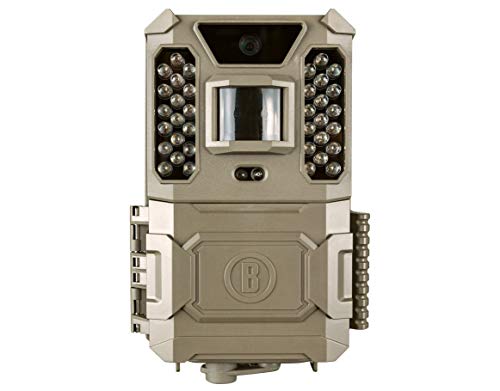 SD-card trail camera Bushnell Prime Low Glow $80.37
 The Bushnell Prime Low Glow is a budget low-glow pick at about $80.37, an 80 ft claimed range and 1080p video.
Specs and variants Check priceFrequently asked questions
Will deer still notice a low-glow flash?
Some may notice a faint red flicker if they are looking straight at the camera when it fires, but from any angle or distance it tends to go unnoticed. Most hunters report low-glow has little practical effect on deer behavior, though a truly pressured or heavily hunted spot is still better served by a no-glow camera.
Does no-glow mean worse photo quality overall?
Only at night. Daytime photo quality depends on the sensor and lens, not the infrared flash type, so a no-glow camera takes daytime photos identical in quality to a low-glow model with the same sensor. The difference shows up specifically in night flash range and brightness.
Can I tell no-glow and low-glow apart just by looking at the camera?
Usually yes, in low light. A low-glow camera's LEDs show a faint red tint when looked at directly, especially in a dark room, while a true no-glow camera's LEDs look black even up close. In daylight both often look identical from the outside.
Is no-glow required by law for hunting cameras?
No, flash type is not typically regulated by wildlife agencies; the more common legal issue is cellular, transmitting cameras being restricted during season or on public land, which is separate from no-glow versus low-glow. Check current state rules either way before placing a camera for the season.
Which flash type drains batteries faster?
Flash type itself has a smaller effect than trigger frequency and video mode. Night infrared triggers and any video recording are the biggest battery drains regardless of no-glow or low-glow, though a longer-range low-glow flash firing at greater distance can draw slightly more power per trigger than a shorter-range no-glow flash.
Researched from published specifications, brand plan lists and verified owner reviews; we do not claim hands-on testing. General information, not professional, legal or security advice. Trail camera rules differ by state: some restrict transmitting cameras during hunting seasons or on public land, so check your state wildlife agency. Recording and audio laws vary; only record where you have the right to.