What size SD card does a trail camera actually need?

SanDisk Extreme 32GB SD
$23.48 listed price, changes oftenWhat size SD card do you actually need?
For most owners checking a camera every few weeks and shooting mostly photos, 32GB is the sweet spot, enough capacity that you are very unlikely to fill it between visits, while staying in the widely-compatible SDHC format every trail camera on the market can read. Bump up to 64GB or 128GB if you shoot a lot of video, run a high-traffic spot like a feeder or food plot, or check the camera only once or twice a season. Drop to 16GB only if you want the cheapest possible option for a single low-traffic, photo-only spot checked often.
Run your own numbers with the SD card calculator, using your expected triggers per day and how long between checks, before buying.
SDHC vs SDXC: why this matters more than gigabytes
SD cards come in two relevant formats. SDHC covers cards up to 32GB and is readable by essentially every trail camera ever made, old and new, cheap and expensive. SDXC covers cards from 64GB up to much larger sizes, but not every camera, especially older or budget models, actually supports SDXC. Buying a 128GB SDXC card for a camera that only reads SDHC means the card either will not be recognized at all, or will be forced to format down to a fraction of its real capacity, if the camera supports it in a limited way. This is the single most common trail camera SD card mistake: buying based on price per gigabyte without checking the camera's actual supported format first.
Gear picks by budget
16GB
 SanDisk Ultra 16GB SDHC$18.41
A SanDisk Ultra 16GB SDHC suits a single low-traffic spot checked often, mostly photos, no video. It fills up fast if you turn on video or a busy food plot, so treat it as a starter card, not a long-term solution.
Check price32GB
SanDisk Extreme 32GB SD$23.48A SanDisk Extreme 32GB SD is the practical default for most owners: enough room for thousands of photos plus some video, in a widely-supported SDHC format nearly every trail camera can read. It suits a spot checked every few weeks to a couple of months.
Check price128GB
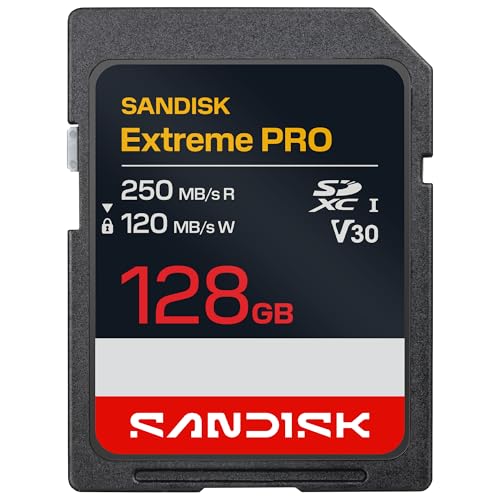 SanDisk Extreme PRO 128GB SD$51.90
A SanDisk Extreme PRO 128GB SD suits a high-traffic spot, heavy video use, or a remote camera checked rarely. Skip this on any older or budget camera whose manual caps out below SDXC support (commonly a stated 32GB max), since the camera may not read a card this large at all.
Check priceWhat size fits your actual use?
| Use pattern | Recommended size | Format needed |
|---|---|---|
| Occasional check, photos only | 16 to 32GB | SDHC |
| Monthly check, mixed photo + some video | 32 to 64GB | SDHC or SDXC |
| Video-heavy or high-traffic spot | 64 to 128GB | SDXC (check camera supports it) |
| Long unattended stretch, remote or cellular backup | 128GB+ | SDXC (check camera supports it) |
How many photos or clips actually fit on a card?
A full-resolution trail camera photo is typically 2 to 8 MB, so a 32GB card holds somewhere in the range of 4,000 to over 10,000 photos depending on resolution and scene detail. A 10 second 1080p video clip runs roughly 10 to 20 MB, meaning the same 32GB card holds roughly 1,500 to 3,000 clips. A 10 second 4K clip runs closer to 40 to 70 MB, cutting that down to somewhere around 450 to 800 clips on the same card. Interpolated high-megapixel modes (40 to 64MP) produce larger files without necessarily sharper real detail, since most sensors are natively 5 to 20MP and upscale from there, so a bigger advertised megapixel count is not automatically worth the extra card space it uses. See the file size reference chart.
Does resolution change how much card you need?
Yes, directly. Dropping from a camera's maximum resolution setting to its mid setting can roughly double how many photos fit on the same card, often with little visible loss in the ability to identify what triggered the camera. If card space (or upload cost on a cellular plan) is a bigger concern than squeezing out maximum detail, this is the easiest lever to pull; see the settings guide for resolution guidance by use.
How do you format and set up a new card?
Always format a new SD card in the camera itself, using the camera's own menu, rather than formatting it on a computer first. Cameras write file structures in a specific way and a computer-formatted card can behave unpredictably, from slow write speed to files the camera cannot properly index. Keep a spare card and a compact 4-in-1 SD card reader or a handheld USB-C viewer in your pack so you can swap and check cards in the field without carrying a laptop.
What if your camera won't read a bigger card?
Check the camera's manual or product listing for its stated maximum supported card size before buying anything larger than 32GB. If the manual caps out at 32GB, that camera is SDHC-only and a 64GB or 128GB SDXC card is simply the wrong purchase, no amount of formatting will fix an unsupported format on an older sensor and controller. When in doubt, 32GB SDHC is the safe universal choice that works in essentially every trail camera made.
Gear mentioned in this guide
Listed prices change often; the button shows the current price.
16GB SanDisk Ultra 16GB SDHC $18.41 A SanDisk Ultra 16GB SDHC suits a single low-traffic spot checked often, mostly photos, no video. It fills up fast if you turn on video or a busy food plot, so treat it as a starter card, not a long-term solution.
Specs and variants Check price 32GB SanDisk Extreme 32GB SD $23.48 A SanDisk Extreme 32GB SD is the practical default for most owners: enough room for thousands of photos plus some video, in a widely-supported SDHC format nearly every trail camera can read. It suits a spot checked every few weeks to a couple of months.
Specs and variants Check price 128GB SanDisk Extreme PRO 128GB SD $51.90 A SanDisk Extreme PRO 128GB SD suits a high-traffic spot, heavy video use, or a remote camera checked rarely. Skip this on any older or budget camera whose manual caps out below SDXC support (commonly a stated 32GB max), since the camera may not read a card this large at all.
Specs and variants Check priceFrequently asked questions
Is a bigger SD card always better?
Not necessarily. A card larger than your camera's supported maximum, commonly 32GB on older or budget SDHC-only cameras, will not work correctly or at all. Check your camera's stated maximum card size first, then buy the largest size within that limit that fits your check schedule and shooting mode.
What is the difference between SDHC and SDXC?
SDHC covers cards up to 32GB and is readable by virtually every trail camera made. SDXC covers 64GB and larger, but only cameras that specifically support SDXC can read those cards; an SDHC-only camera will not recognize a 64GB or larger SDXC card properly.
Should I format my SD card on my computer or in the camera?
In the camera, always. Formatting on a computer can create a file structure the camera does not fully support, leading to slow performance or files the camera fails to index correctly. Use the camera's own menu format option for every new card.
How many photos does a 32GB card actually hold?
Roughly 4,000 to over 10,000 full-resolution photos, depending on the camera's resolution setting and how much detail is in each scene, since photo files run about 2 to 8 MB each. Video use cuts that number down significantly since clips run far larger per file than a still photo.
Researched from published specifications, brand plan lists and verified owner reviews; we do not claim hands-on testing. General information, not professional, legal or security advice. Trail camera rules differ by state: some restrict transmitting cameras during hunting seasons or on public land, so check your state wildlife agency. Recording and audio laws vary; only record where you have the right to.